Who Can You Trust? Understanding Supplement Verification and Third-Party Testing
In a marketplace where bold claims and glossy packaging often substitute for proof, consumers are left wondering one thing: Who can I actually trust?
The truth is, the supplement industry’s self-policing model—created under the 1994 Dietary Supplement Health and Education Act (DSHEA)—puts most of the responsibility for quality and safety on manufacturers, not regulators.
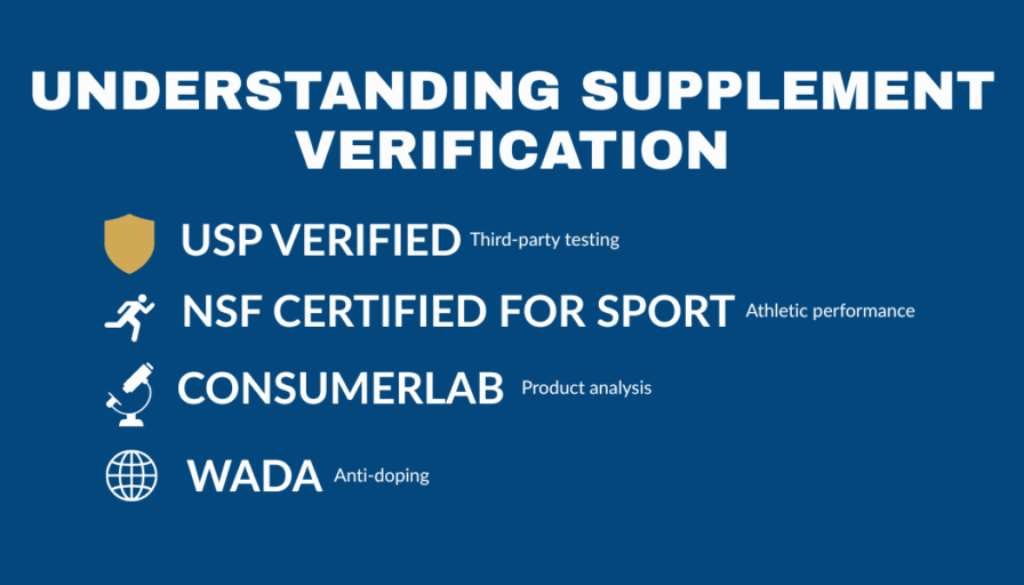
That’s where third-party verification programs step in. Independent testing by organizations like U.S. Pharmacopeia (USP), NSF International, ConsumerLab, the National Animal Supplement Council (NASC), and the World Anti-Doping Agency (WADA) helps bridge the gap between marketing promises and verified purity, potency, and safety.
For anyone serious about supplement integrity—whether you’re an athlete, a pet owner, or just someone looking to avoid contaminated capsules—these seals and certifications matter.
Why Third-Party Testing Exists
Let’s be clear: supplement companies are not required to test their products for safety or efficacy before selling them. The FDA can only act after harm occurs or a product is proven unsafe. Even Good Manufacturing Practices (GMPs), which the FDA enforces, focus mainly on cleanliness and record-keeping—not whether what’s on the label is actually in the bottle.
This reactive system leaves plenty of room for error—and for abuse.
Numerous studies and FDA investigations have found supplements adulterated with prescription drugs, contaminated with heavy metals, or containing little to none of the labeled active ingredient. A 2023 Harvard analysis found that 27 % of herbal supplements tested failed basic identity or purity standards.
Third-party testing exists because consumers deserve better than blind trust. Independent certifiers verify what manufacturers claim, offering a rare signal of integrity in a largely unregulated space.
U.S. Pharmacopeia (USP): The Gold Standard for Identity and Purity
Founded in 1820, the U.S. Pharmacopeia (USP) predates the FDA by nearly a century and remains one of the world’s most respected authorities in pharmaceutical and supplement quality.
The USP Verified Mark on a supplement bottle means four critical things:
- Ingredients match the label. The product contains the listed ingredients in the declared amounts.
- No harmful contaminants. It has been tested for heavy metals, pesticides, and microbial contamination.
- Manufactured under proper conditions. The facility meets USP’s rigorous GMP auditing standards.
- Dissolves properly. The product will release its ingredients within specified time frames so they can be absorbed.
USP’s testing is independent—companies must submit their formulas, raw materials, and final products for repeated analysis. Only about 2 % of supplements on the market carry the USP Verified Mark, underscoring how few brands meet those criteria.
Example:
Nature Made, Kirkland Signature, and some CVS Health store brands hold USP verification for select products, offering consumers rare assurance that these mainstream brands meet pharmaceutical-level purity standards.
NSF International: Certified for Sport®
If USP focuses on pharmaceutical-grade quality, NSF International focuses on athletic safety. Originally founded in 1944 as the National Sanitation Foundation, NSF has evolved into a global leader in product testing and public health standards.
Its NSF Certified for Sport® program addresses a critical problem: supplement contamination with banned substances. Studies show that 10–15 % of sports supplements are tainted with anabolic steroids, stimulants, or SARMs (selective androgen receptor modulators)—often undeclared on labels.
What NSF Certified for Sport® Means
- Ingredient verification: Confirms that the product contains exactly what’s listed.
- Banned substance screening: Tests for over 270 substances prohibited by Major League Baseball, the NFL, NHL, and PGA, as well as the World Anti-Doping Agency (WADA).
- Facility auditing: Ensures GMP compliance and prevents cross-contamination.
- Continuous testing: Products are periodically retested to maintain certification.
Athletes subject to random drug testing rely on the NSF mark to avoid accidental violations. Even trace contamination from a tainted supplement can lead to suspension or loss of sponsorship—making NSF Certified for Sport® an essential safeguard.
Pro tip: For non-athletes, NSF’s general “Contents Tested and Certified” seal still provides assurance of purity and accurate labeling.
ConsumerLab: The Watchdog for Everyday Users
While USP and NSF operate primarily through voluntary manufacturer partnerships, ConsumerLab.com serves as an independent watchdog for consumers. Founded in 1999, it buys supplements off store shelves—just like a regular customer—and tests them in certified laboratories.
ConsumerLab publishes its findings in detailed reports accessible by subscription, including:
- Identity and potency: Does the product contain the labeled ingredients in the correct amounts?
- Purity: Tests for lead, arsenic, mercury, and cadmium.
- Cost-value ratio: How much does each verified dose actually cost?
- Disintegration: Will the tablet dissolve properly for absorption?
Because ConsumerLab purchases products anonymously, it eliminates the bias of manufacturer-submitted samples. The resulting data are sometimes uncomfortable for the industry: each year, the organization identifies dozens of failed products—often household names—that don’t meet label claims or exceed contaminant thresholds.
For professionals, this transparency provides a vital reference. For consumers, it’s one of the few reliable ways to see who passes—and who flunks—independent verification.
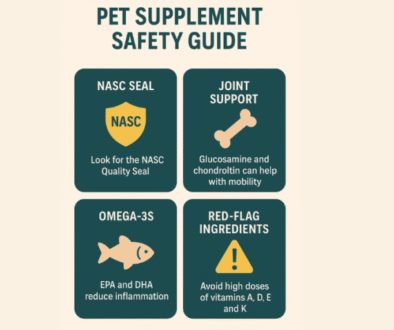
National Animal Supplement Council (NASC): Protecting Pets
The supplement world doesn’t stop with humans. The National Animal Supplement Council (NASC), founded in 2001, provides a self-regulatory framework for animal health products, an area that’s even less regulated than human supplements.
Pet supplements—joint chews, calming treats, probiotics, and vitamins—are technically unapproved feed additives under FDA rules. NASC fills that vacuum by establishing standards and auditing companies for quality and safety.
The NASC Quality Seal means:
- The company has undergone a third-party facility audit.
- Adverse event reporting systems are in place and monitored.
- Products are accurately labeled with active ingredients, lot numbers, and expiration dates.
- Ingredients meet federal and state regulations for animal feed.
While NASC cannot guarantee therapeutic efficacy (just like DSHEA doesn’t for humans), it dramatically reduces the risk of contamination and mislabeling in the pet supplement sector.
Consumers should seek the NASC Quality Seal just as they would look for USP or NSF marks on human supplements—especially given recent recalls of pet products contaminated with Salmonella or undeclared drugs.
World Anti-Doping Agency (WADA): The Global Standard for Clean Sport
Founded in 1999 after a series of high-profile doping scandals, the World Anti-Doping Agency (WADA) establishes the international standard for banned substances in sport.
WADA does not certify supplements directly, but it maintains the Prohibited List, updated annually, that governs what athletes cannot use. Substances include anabolic agents, stimulants, diuretics, peptide hormones, cannabinoids, and beta-2 agonists.
The problem is that supplements often contain trace contamination—or intentionally adulterated compounds—structurally similar to banned drugs. That’s why WADA collaborates with organizations like NSF Certified for Sport®, Informed Choice, and Banned Substances Control Group (BSCG) to test products marketed to athletes.
Athletes under Olympic, NCAA, or professional league testing should only use supplements certified by one of these recognized testing programs. Even accidental ingestion of a tainted product can result in disqualification or permanent bans.
Real-world reminder: In 2022, U.S. sprinter Blessing Okagbare was banned after testing positive for a SARM she claimed was in a “natural supplement.” Cases like this show how critical verified certifications are in elite athletics.
How These Systems Interconnect
| Certification | Focus Area | Testing Type | Who It Protects |
| USP Verified | Identity, purity, dissolution | Laboratory & facility audit | General consumers |
| NSF Certified for Sport® | Banned substance control, purity | Lab testing & GMP audit | Athletes |
| ConsumerLab | Market surveillance, contamination | Anonymous off-shelf testing | Consumers |
| NASC Seal | Quality and reporting in pet supplements | Facility audit & compliance review | Pets & pet owners |
| WADA / Partners | Anti-doping enforcement | Substance detection, certification via partner labs | Competitive athletes |
Together, these programs form a patchwork safety net—one that compensates for DSHEA’s laissez-faire approach to supplement oversight.
Why Verification Matters: A Pharmacist’s Perspective
After 25 years in pharmacy practice, I can say this with confidence: most supplement users assume far more regulatory oversight exists than it actually does. Seeing a bottle on a retail shelf implies legitimacy, but that perception is often false.
Third-party testing isn’t a luxury—it’s a necessity. It protects against:
- Contamination (lead, microbes, or drugs)
- Label fraud (underdosed or missing ingredients)
- Doping violations (for athletes)
- Inconsistent potency (one batch strong, the next inert)
Consumers shouldn’t have to rely on blind faith in corporate marketing. These certifications restore a degree of scientific accountability to a marketplace built on trust without verification.
How to Verify a Supplement Before You Buy
- Look for seals. USP, NSF, or NASC seals are often printed near the Supplement Facts panel.
- Cross-check online databases.
- USP: usp.org/verification-service
- NSF: nsf.org/certified-for-sport
- NASC: nasc.cc
- USP: usp.org/verification-service
- Search ConsumerLab. For $59/year, you can access independent reports on hundreds of brands.
- Be skeptical of “clinically proven” language without a citation.
- Consult a pharmacist or registered dietitian. Professionals can cross-reference formulations with established evidence.
Final Thoughts
The supplement industry thrives in the gray zone between food and medicine. While DSHEA gives consumers broad access, it also leaves them largely unprotected.
Third-party testing and verification programs—USP, NSF, ConsumerLab, NASC, and WADA—offer the best tools we have to separate trustworthy products from questionable ones.
In a profit-driven marketplace, these seals are not mere logos—they’re lifelines for informed consumers. Whether you’re fueling athletic performance, supporting pet health, or managing chronic wellness, the difference between a verified and an unverified supplement could be the difference between benefit and risk.As I tell my patients and viewers: don’t just buy a promise—buy proof.