The Evolving Blueprint: Age-Specific Supplement Needs
The human body is a marvel of adaptation, constantly changing from infancy through old age. With these physiological transformations come shifting nutritional requirements. What supports rapid growth in childhood differs from what sustains peak performance in adulthood or preserves vitality in later years. Consequently, the role of dietary supplements is dynamic, evolving alongside our bodies’ unique demands.
In this guide, we’ll explore age-specific supplement needs, highlighting how nutrient absorption, metabolism, and health priorities change across the lifespan. These recommendations serve as general guidelines—individual needs depend on diet, lifestyle, medical history, and medication use. Always consult a healthcare professional before starting or adjusting supplements.
Dynamic Nutrient Needs Across the Lifespan
Growth and Development: Infants and children undergo rapid physical and cognitive growth, requiring nutrients that support bones, brain, and organs.
Hormonal Changes: Puberty, pregnancy, lactation, and menopause shift nutrient requirements, such as iron for menstruation or calcium for bone density.
Metabolism: Metabolic rate naturally slows with age, influencing how efficiently the body utilizes nutrients.
Organ Function: Digestive efficiency, liver metabolism, and kidney excretion change over time, affecting nutrient absorption and medication interactions.
Lifestyle & Diet: Dietary patterns, activity levels, and sun exposure evolve across life stages.
Medication Use: The prevalence of prescription drugs rises with age, increasing the risk of nutrient-drug and supplement-drug interactions.
Understanding these changes is key to making informed supplement choices that truly support health.
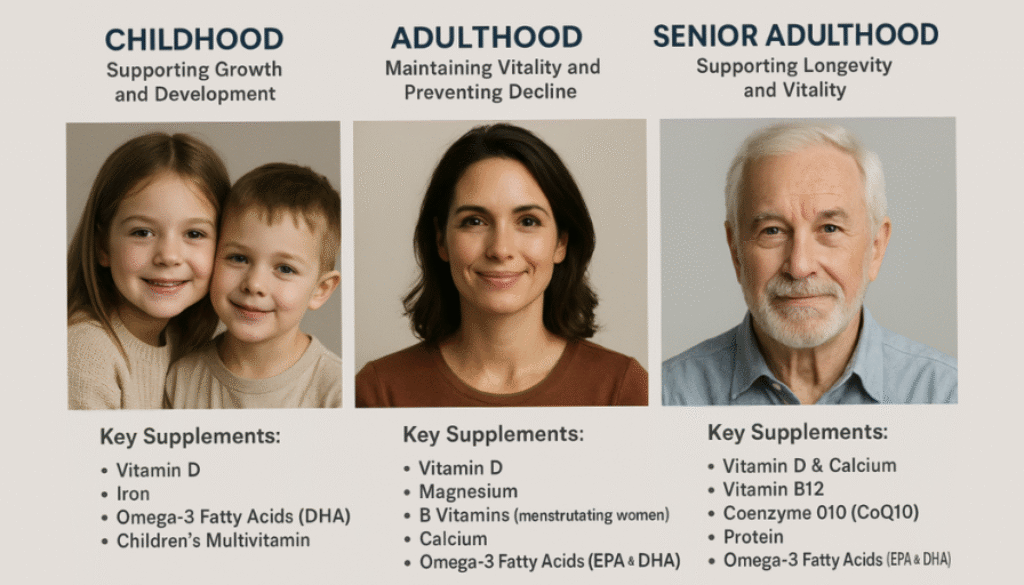
Childhood (Ages 0–18): Supporting Growth and Development
Childhood is a period of extraordinary growth. While a balanced diet is the cornerstone, certain supplements may help support brain development, bone mineralization, and immune system maturation, particularly when dietary intake is limited.
Key Supplements:
- Vitamin D: Essential for calcium absorption, bone strength, and immune function. Breastfed infants often require 400 IU/day; older children may need 600 IU/day if diet and sun exposure are insufficient [1][2].
- Iron: Critical for cognitive development and preventing anemia. Supplementation should be guided by pediatricians after confirmed deficiency [2].
- Omega-3 Fatty Acids (DHA): Supports brain and eye development. Consider age-appropriate DHA supplements if dietary intake is insufficient [3].
- Children’s Multivitamin: Can be helpful for picky eaters or restrictive diets but should not replace healthy eating habits.
Safety Considerations:
- Strictly follow dosage guidelines—especially for fat-soluble vitamins and minerals like iron.
- Use only age-appropriate formulations (liquid, chewable, or gummy).
- Always consult a pediatrician before starting supplementation.
Adulthood (Ages 18–65): Maintaining Vitality and Preventing Decline
Adult supplement needs vary from peak physical performance in young adulthood to maintaining health and preventing chronic disease in middle age. Lifestyle, diet, and stress influence nutrient requirements.
Key Supplements:
- Vitamin D: Supports bone health, immune function, and mood. Typical supplementation: 1,000–2,000 IU/day, adjusted based on blood tests [4].
- Magnesium: Supports muscle and nerve function, blood sugar control, and bone health. Forms like glycinate or citrate are more bioavailable; 200–400 mg/day is common [1].
- B Vitamins (B12, Folate, B6): Essential for energy metabolism and nerve function. Supplementation may benefit vegetarians, vegans, and those under high stress [1].
- Iron (for menstruating women): Should only be supplemented after confirmed deficiency.
- Calcium: Important for bone health; supplementation may be needed if dietary intake is low.
- Omega-3 Fatty Acids (EPA & DHA): Support cardiovascular and brain health. Typical doses: 1,000–2,000 mg/day.
Safety Considerations:
- Be mindful of potential supplement-drug interactions.
- Address lifestyle factors like stress and diet; supplements are supportive, not curative.
Senior Adulthood (Ages 65+): Supporting Longevity and Vitality
Aging brings changes that increase the relevance of supplementation:
Physiological Considerations:
- Decreased absorption of B12, calcium, and iron [1][5].
- Reduced appetite yet stable or increased nutrient needs.
- Bone density loss and muscle decline (sarcopenia).
- Cognitive changes and polypharmacy.
Key Supplements:
- Vitamin D & Calcium: Crucial for bone health; seniors may need higher doses (Vitamin D 800–2000 IU/day, calcium 1200 mg/day) [1].
- Vitamin B12: Deficiency is common due to decreased stomach acid; supplementation supports nerve and cognitive health [5].
- Coenzyme Q10 (CoQ10): Supports cellular energy and may offset statin-related depletion [5].
- Protein: Helps combat sarcopenia; supplements can assist when dietary intake is inadequate [6].
- Omega-3 Fatty Acids (EPA & DHA): Support brain and cardiovascular health.
Safety Considerations:
- Review supplements with a pharmacist or physician to avoid interactions.
- Adjust forms for swallowing difficulties.
- Monitor labs to guide dosing and prevent toxicity.
Principles Across All Ages
- Food First: Supplements are meant to complement a nutrient-rich diet, not replace it.
- Individual Variation: Genetics, health status, and lifestyle dictate specific needs.
- Professional Guidance: Always consult healthcare providers to ensure safe and effective supplementation.
Conclusion: Lifelong Personalized NutritionFrom childhood to senior adulthood, nutritional needs evolve alongside the body. By embracing personalized, evidence-based supplementation and consulting trusted healthcare professionals, you can ensure that supplements support health, vitality, and longevity at every stage of life.