Animal Supplements — What’s Really in Your Pet’s Bowl?
Explore the science behind pet supplements for dogs and cats—what works, what’s hype, and how to choose safe, effective products for your furry companions.
SEO Keywords: animal supplements, dog vitamins, cat supplements, pet nutrition, NASC riuy54xzedsverified, pet joint health, omega-3 for dogs, probiotics for pets, safe pet supplements
The Rise of Pet Supplements
The supplement aisle isn’t just for humans anymore. From multivitamins and probiotics to CBD oils and joint chews, pet wellness has become a booming $2 billion industry in the U.S. alone. Nearly one-third of dog owners and one-fifth of cat owners now give their pets some form of dietary supplement [1]. The trend reflects a growing desire among pet parents to support longevity and vitality in their furry family members—but also introduces the same risks of poor regulation and misleading claims that plague the human supplement market.
What’s Driving the Trend?
Many owners turn to supplements to help pets with mobility issues, digestive problems, allergies, anxiety, or dull coats. The most common categories include:
- Joint health: Glucosamine, chondroitin, MSM, and green-lipped mussel are top sellers for aging dogs.
- Skin and coat: Omega-3 fatty acids (EPA and DHA) from fish oil can reduce inflammation and improve luster.
- Digestive support: Probiotics, prebiotics, and digestive enzymes help manage diarrhea and gut imbalance.
- Calming aids: L-theanine, tryptophan, and CBD products are marketed for stress or separation anxiety.
- Multivitamins: Designed to “fill the gaps” in commercial diets, though most complete pet foods already meet AAFCO nutrient profiles.
While some of these products show promise, others rest on shaky evidence or may even interfere with prescribed veterinary treatments.
Regulation: Not Quite Like Human Supplements
Pet supplements occupy a gray zone in U.S. law. Unlike prescription veterinary drugs, they aren’t required to prove safety or efficacy before marketing. The FDA Center for Veterinary Medicine (CVM) oversees labeling and adverse-event reporting, but enforcement is limited.
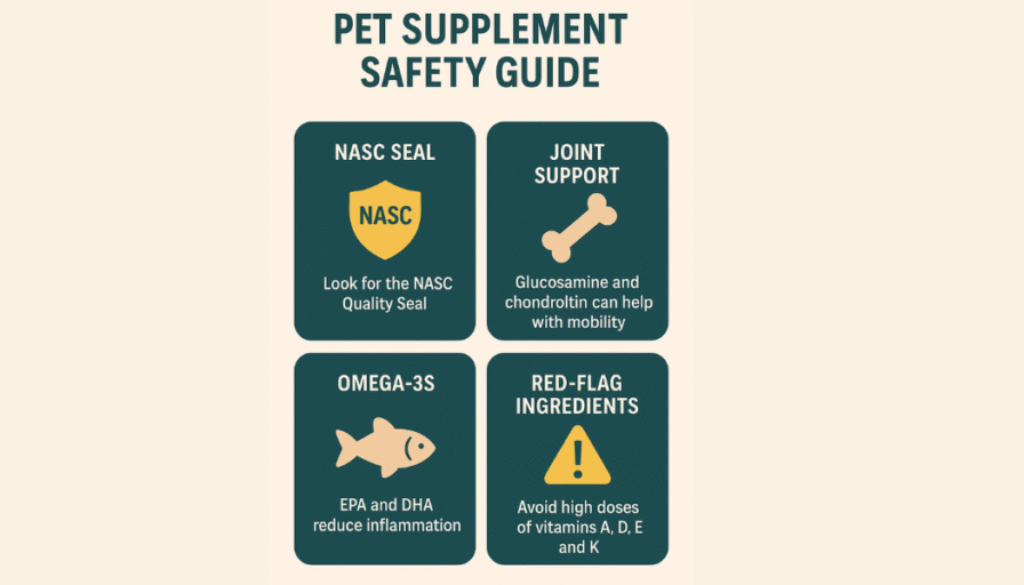
To promote quality and self-regulation, the National Animal Supplement Council (NASC) was formed in 2001. Products bearing the NASC Quality Seal have undergone third-party audits for manufacturing standards, adverse-event reporting, and ingredient verification. While not a guarantee of efficacy, the seal does indicate the company follows basic safety and quality protocols.
What the Evidence Shows
- Joint Support:
Glucosamine and chondroitin sulfate can modestly improve mobility and comfort in dogs with osteoarthritis, particularly when combined with omega-3s [2]. Cats show less consistent results due to lower absorption and unique metabolic pathways. - Omega-3 Fatty Acids:
Multiple trials confirm that EPA and DHA reduce inflammatory markers in dogs with arthritis and dermatitis [3]. However, products must be properly stabilized—oxidized fish oils can be harmful. - Probiotics and Gut Health:
Specific strains such as Enterococcus faecium SF68 and Lactobacillus rhamnosus GG have shown measurable benefits for diarrhea control and immune modulation in dogs [4]. Not all pet probiotics contain viable strains, so CFU counts and expiration dates matter. - CBD and Calming Agents:
Evidence remains preliminary. While some studies report reduced stress or seizure frequency, variability in cannabinoid concentration and absorption complicates interpretation [5].
Hidden Risks in Pet Supplements
Just like in the human market, not all labels tell the truth. Independent analyses by ConsumerLab and Cornell Veterinary Diagnostics have found discrepancies in active ingredient content, contamination with heavy metals, and undeclared pharmaceuticals.
Key concerns include:
- Excessive dosing: Fat-soluble vitamins (A, D, E, K) can accumulate and cause toxicity.
- Drug interactions: Omega-3s can potentiate anticoagulant effects; herbal sedatives may amplify anesthesia.
- Species sensitivity: Cats are especially vulnerable—certain essential oils, garlic, and even green tea extract can be toxic at low doses.
How to Choose a Safe Supplement
- Look for the NASC Seal. It’s the closest thing to a “USP Verified” equivalent in the animal world.
- Buy from veterinary channels. Products distributed through vet clinics often undergo stricter quality control.
- Check for third-party testing. NSF International and ConsumerLab occasionally evaluate pet products for label accuracy.
- Verify the manufacturer. Transparent companies provide batch testing, Certificates of Analysis, and clear contact information.
- Ask your veterinarian. Especially if your pet takes prescription medications or has chronic conditions.
Emerging Research and Future Directions
Advances in veterinary nutrigenomics are exploring how breed-specific genetics influence nutrient metabolism. Early studies suggest Labrador retrievers with certain collagen variants respond differently to glucosamine supplementation than German shepherds [6]. Similarly, probiotics may soon be tailored by microbiome profile rather than species alone.
Meanwhile, regulators are beginning to take notice. In 2023, the FDA CVM proposed a new framework to distinguish “animal food additives” from “nutritional health products,” potentially introducing pre-market safety documentation.
The Bottom Line
Pet supplements can offer real benefits—but only when chosen wisely. The NASC seal, clear labeling, and veterinary guidance are the foundation of safe supplementation. Ultimately, no chew or capsule replaces a balanced diet, regular exercise, and preventive veterinary care.
Your dog or cat relies on you to make science-based decisions. With careful scrutiny, you can give them the best chance at a long, healthy life—without falling for marketing tricks disguised as nutrition.
References
[1] Pet Supplements Market Report, Grand View Research, 2023.
[2] McCarthy G et al. Vet J. 2007;174(1):54-62.
[3] Fritsch DA et al. J Am Vet Med Assoc. 2010;236(1):59-66.
[4] Bybee SN et al. Vet Ther. 2011;12(2):85-92.
[5] Kogan LR et al. Front Vet Sci. 2020;7:388.
[6] Brown SA et al. Anim Genet. 2022;53(5):599-609.