GRAS, FDCA, and False Research Findings: How History and Bias Shape Modern Supplements
When you think of dietary supplements, you probably picture bottles of vitamins, powders, or herbal remedies. But the rules governing these products today have roots that stretch back more than a century—to an era of industrial meatpacking scandals, unsanitary food conditions, and the birth of U.S. food safety law. Understanding this history is essential to grasp why supplements are regulated the way they are today—and why profit often drives decisions before consumer safety.
Moreover, as research has shown, even expert assessments and published studies—often relied on in regulatory decisions—can be false or misleading, particularly when influenced by industry funding or methodological flaws.
The Meatpacking Scandals That Sparked Reform
At the turn of the 20th century, U.S. meatpacking plants were largely unregulated. Exposés like Upton Sinclair’s The Jungle (1906) revealed horrifying conditions: rotten meat, contaminated products, and workers facing dangerous, unhygienic environments.
Public outrage prompted Congress to pass the Federal Food and Drugs Act (FDFA) in 1906, prohibiting the sale of misbranded or adulterated food and drugs. This act laid the foundation for modern food safety oversight and ultimately influenced the regulation of dietary supplements decades later.
Key takeaway: Consumer protection often arrives after a crisis, a theme echoed in supplement regulation under DSHEA.
GRAS: Generally Recognized As Safe
As food production industrialized, regulators faced a challenge: how to allow innovation while protecting consumers. This led to the concept of GRAS—Generally Recognized As Safe.
Definition: A substance is GRAS if qualified experts generally recognize it as safe for its intended use.
Application: GRAS allows certain ingredients to be used in foods (and later supplements) without pre-market approval, provided evidence of safety exists.
For example, vitamins like niacin and ascorbic acid were classified as GRAS long before supplements became mainstream. This principle reduced regulatory burden while encouraging innovation, but it also placed responsibility on manufacturers and consumers to ensure safety—a responsibility sometimes exploited by profit-driven companies.
Expert Bias and False Research Findings
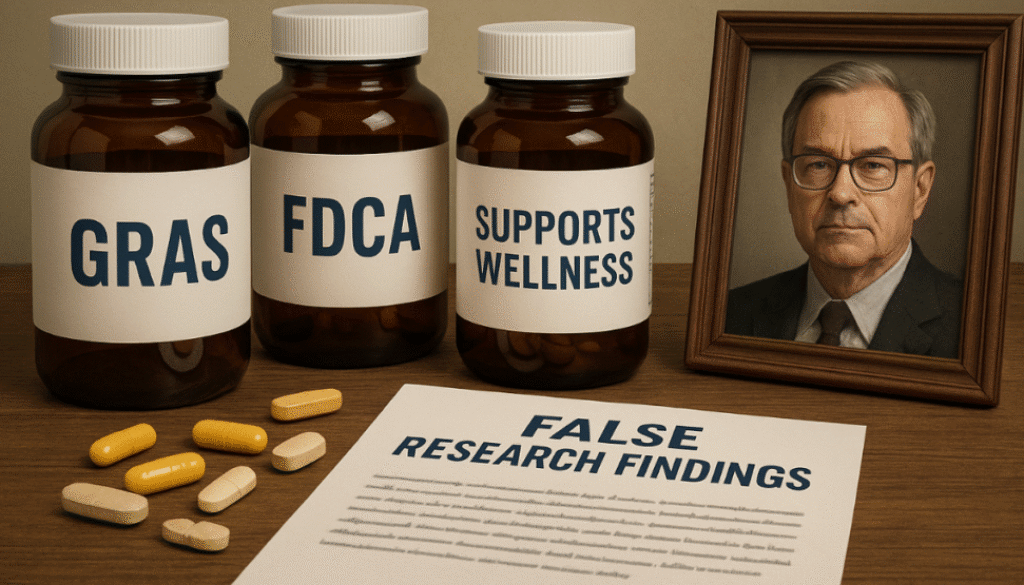
While GRAS relies on expert judgment, not all expert opinions are free from influence. As Dr. John Ioannidis, PhD, demonstrated in his landmark 2005 paper “Why Most Published Research Findings Are False” (PLoS Medicine 2:e124), even peer-reviewed studies and expert consensus can be skewed by financial conflicts of interest, methodological weaknesses, and selective reporting.
Ioannidis showed that industry-funded studies frequently overestimate benefits and underreport harms.
Experts may consciously or unconsciously favor outcomes that align with funding sources or regulatory incentives.
In the context of GRAS, this means that what is “generally recognized as safe” may be influenced by economic interests, not purely scientific consensus.
Implication for supplements: Consumers are effectively relying on judgments that may be shaped by profit motives, highlighting the importance of evidence-based supplement evaluation and skepticism of research bias in supplements.
The 1938 Food, Drug, and Cosmetic Act (FDCA)
The FDFA was updated in 1938 with the Food, Drug, and Cosmetic Act (FDCA), prompted by tragic incidents, such as the elixir of sulfanilamide disaster, which killed over 100 people due to toxic solvents. The FDCA:
Required pre-market safety testing for drugs
Strengthened enforcement against misbranded or adulterated products
Introduced regulatory authority over cosmetics and food additives
Crucially, GRAS substances were exempt from pre-market approval, establishing a framework that would later allow dietary supplements to be sold without rigorous safety or efficacy testing.
Linking GRAS, Expert Bias, and DSHEA Loopholes
When DSHEA was passed in 1994, it created a regulatory environment for supplements modeled on GRAS principles:
Supplements are treated more like foods than drugs
Manufacturers are responsible for safety and labeling
The FDA can act only after a product reaches the market, not before
Combined with Ioannidis’ findings, this highlights a critical point: even expert-driven safety assessments can be susceptible to bias or financial influence, particularly when the supplement industry has strong economic incentives. Much like early 20th-century food companies exploited gaps in oversight, modern supplement companies can leverage regulatory frameworks and expert uncertainty to maximize profit while minimizing accountability.
Lessons from History and Research
Regulatory gaps create opportunities for profit-first behavior. Then and now, businesses can innovate—or cut corners—within the law.
Expert judgment is not infallible. Financial incentives and methodological weaknesses can skew “scientifically recognized” safety, creating false research findings.
Consumer education is essential. Early 20th-century Americans had to rely on journalism and advocacy to demand safer food; today, supplement consumers must evaluate labels, claims, and third-party certifications.
Post-market oversight is reactive. Historical crises like The Jungle or the sulfanilamide tragedy forced reform—much like Ephedra and other unsafe supplements were removed only after harm became evident.
Modern Implications for Supplement Consumers
Today, the echoes of history and research are clear:
Supplements do not require pre-market efficacy proof.
Proprietary blends can hide subtherapeutic dosing, much like early food adulteration hid inferior ingredients.
Marketing often emphasizes perception over science, echoing past practices where “appearance of quality” mattered more than actual safety.
Expert guidance may carry bias, and research findings can be false, emphasizing the need for evidence-based evaluation.
Actionable advice:
Read labels carefully. Identify proprietary blends, total ingredient amounts, and active ingredient doses.
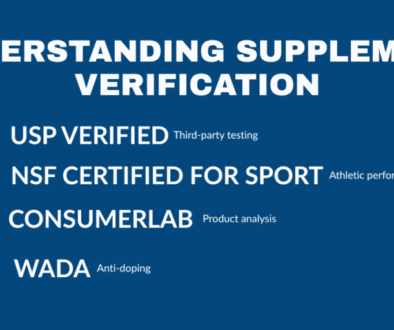
Look for third-party verification. USP, NSF, and ConsumerLab seals indicate independent testing.
Cross-check claims against peer-reviewed research. Be aware of study funding sources, conflicts of interest, and potential false research findings.
Consult professionals. Pharmacists, dietitians, and physicians can evaluate safety, dosing, and interactions.
The Bottom Line
The GRAS principle and FDCA were designed to encourage innovation while protecting consumers, but history and research show that profit motives and expert bias can influence what is considered “safe”. DSHEA inherited this philosophy, creating a supplement market where companies can legally sell products without rigorous proof of efficacy or unbiased expert validation.
As a pharmacist, I urge consumers to approach supplements with informed skepticism, prioritize products with transparent labels and third-party verification, and always cross-check claims with scientific evidence, keeping in mind that even expert opinion and published research can be false or biased.
For a deeper dive into DSHEA, GRAS, and supplement safety strategies, visit my : YouTube channel or my book for evidence-based guidance.