Proprietary Blends: How the Supplement Industry Hides Weak Formulas
The U.S. dietary supplement market is booming, with tens of thousands of products on shelves and online. Vitamins, minerals, herbs, and specialty nutrients promise everything from immune support to joint health, brain function, and weight loss. But beneath flashy packaging and persuasive marketing lies a critical question: Are you really getting what the label claims, or are companies hiding low-dose ingredients to maximize profit?
The answer often lies in the so-called proprietary blend, a legal loophole that lets supplement manufacturers mask the actual doses of ingredients while still making bold claims. From a pharmacist’s perspective, this practice is one of the clearest examples of how profit often comes before health outcomes in today’s supplement industry.
What Is a Proprietary Blend?
A proprietary blend is a group of ingredients listed together on a supplement label without disclosing the individual amounts of each component. Instead, the total weight of the blend is given, along with the ingredients in descending order by weight.
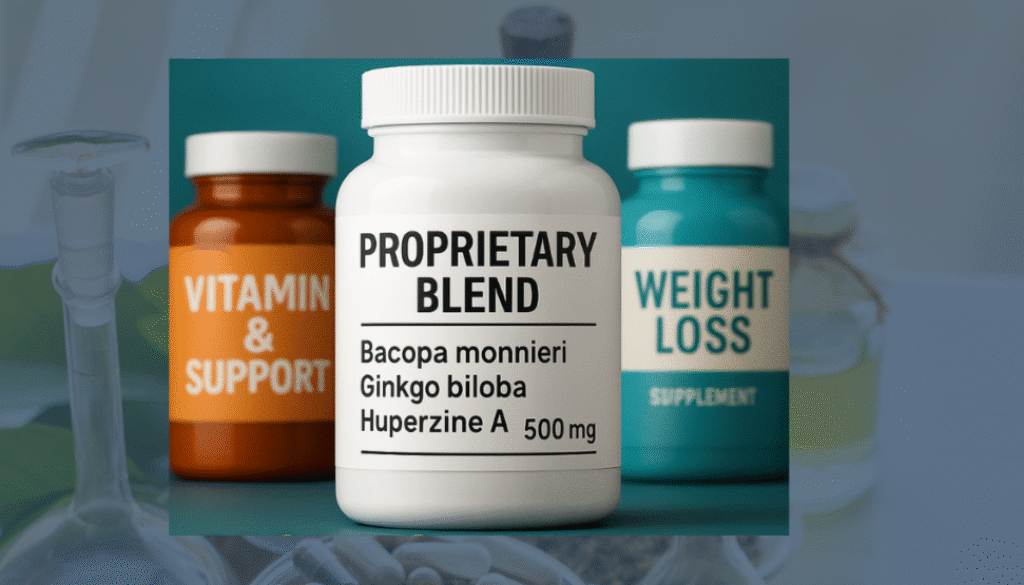
For example, a brain supplement might list:
Proprietary Nootropic Blend – 500 mg
Bacopa monnieri
Ginkgo biloba
Huperzine A
In this case, the total blend weighs 500 mg, but you have no idea how much Bacopa, Ginkgo, or Huperzine is actually in the formula. This lack of transparency makes it impossible to determine if each ingredient is at a clinically effective dose, even if research supports its benefits at certain levels.
Why Companies Use Proprietary Blends
From a business perspective, proprietary blends serve several purposes:
Cost Savings: High-quality ingredients can be expensive. By reducing the actual dose and mixing it with cheaper fillers, companies can maintain perceived efficacy while cutting costs.
Marketing Flexibility: Proprietary blends allow companies to include trendy or exotic ingredients in tiny amounts just to list them on the label. This creates the illusion of a cutting-edge formula without the expense.
Competitive Protection: By not revealing exact dosages, companies make it harder for competitors to reverse-engineer formulas.
Pharmacist’s insight: While these blends are legal under DSHEA, they frequently prioritize profit and marketing appeal over delivering clinically effective doses. Consumers are left to trust that the first ingredient listed is sufficient—which is often not the case.
The Regulatory Perspective
DSHEA and FDA regulations allow proprietary blends as long as:
Ingredients are listed in descending order by weight.
Total blend amount is disclosed.
The supplement meets Good Manufacturing Practices (GMPs).
What DSHEA does not require:
Disclosure of individual ingredient dosages.
Proof that doses are efficacious for the claimed benefit.
Pre-market review for effectiveness or potency.
This gap highlights the profit-first mindset embedded in the regulatory framework: companies can market products that look scientifically impressive, but there is no guarantee the consumer will actually receive the therapeutic dose shown in research studies.
Real-World Examples
Immune-Boosting Supplements: Many contain proprietary blends of echinacea, elderberry, and zinc totaling 500–600 mg. Clinical studies suggest effective doses of echinacea alone can be 900–1,200 mg—meaning many products deliver subtherapeutic amounts.
Joint Health Formulas: Proprietary blends of glucosamine, chondroitin, and MSM often fall below clinical thresholds, yet labels claim “supports joint comfort,” creating a marketing illusion of effectiveness.
Pre-Workout Powders: Stimulant blends sometimes list caffeine, beta-alanine, and nitric oxide precursors in proprietary blends without clarifying safe vs. effective doses, leaving users vulnerable to underdosed or overstimulating formulations.
In each case, the legal allowance for proprietary blends is being leveraged for profit, often at the consumer’s expense.
How to Protect Yourself
While proprietary blends are legal, savvy consumers can take steps to ensure they’re buying products that deliver value and safety:
Look for third-party verification. USP, NSF Certified for Sport®, and ConsumerLab seals indicate that a product has undergone testing for ingredient verification, purity, and potency.
Scrutinize ingredient placement. The first few ingredients listed in a proprietary blend generally make up the bulk of the formula. If the ingredient you want is listed last, the dose is likely negligible.
Compare to clinical research. Check recommended doses in peer-reviewed studies to determine whether the product provides a therapeutically meaningful amount.
Watch for marketing exaggeration. Phrases like “clinically formulated” or “advanced blend” are marketing language, not proof of effectiveness.
Consult professionals. Pharmacists, dietitians, or physicians can help you evaluate dosing, interactions, and product quality.
Why the Industry Keeps Proprietary Blends
From a business perspective, proprietary blends make sense:
They maximize profit. Companies can reduce costs while maintaining the appearance of a premium product.
They protect intellectual property. Competitors can’t easily copy formulas without knowing exact dosages.
They exploit regulatory gaps. DSHEA allows structure/function claims and proprietary blends without pre-market efficacy review, meaning the law enables profit-first strategies.
From a consumer perspective, this represents a continuing challenge: without transparency, you must rely on labels, third-party testing, and professional guidance to ensure safety and effectiveness.
The Bottom Line
Proprietary blends are one of the clearest examples of how the U.S. supplement industry is profit-driven first and health-focused second. DSHEA allows companies to market products that may be underdosed, subtherapeutic, or primarily designed for marketing appeal.
As a pharmacist, I advise consumers to:
Demand transparency in ingredient dosing.
Choose products verified by independent labs.
Educate themselves on clinical dosing and research.
Consult healthcare professionals before starting new supplements, especially when taking medications.
Understanding proprietary blends is not just an academic exercise—it’s critical for protecting your health and making informed choices in a market where profit often comes before outcomes.
For a deeper dive into supplement safety, DSHEA, and how to navigate the market with confidence, check out my YouTube channel or my book for evidence-based guidance.
Cracking the Code: How to Read a Supplement Label Like a Pro – Evidence Education Wellness
October 19, 2025 @ 1:45 pm
[…] you’ll see ingredients lumped under a mysterious “proprietary blend” with no individual amounts listed. The label might brag about “1,200 mg Energy Complex” with […]