The Marketing Machine: How Supplements Sell Hype Instead of Health
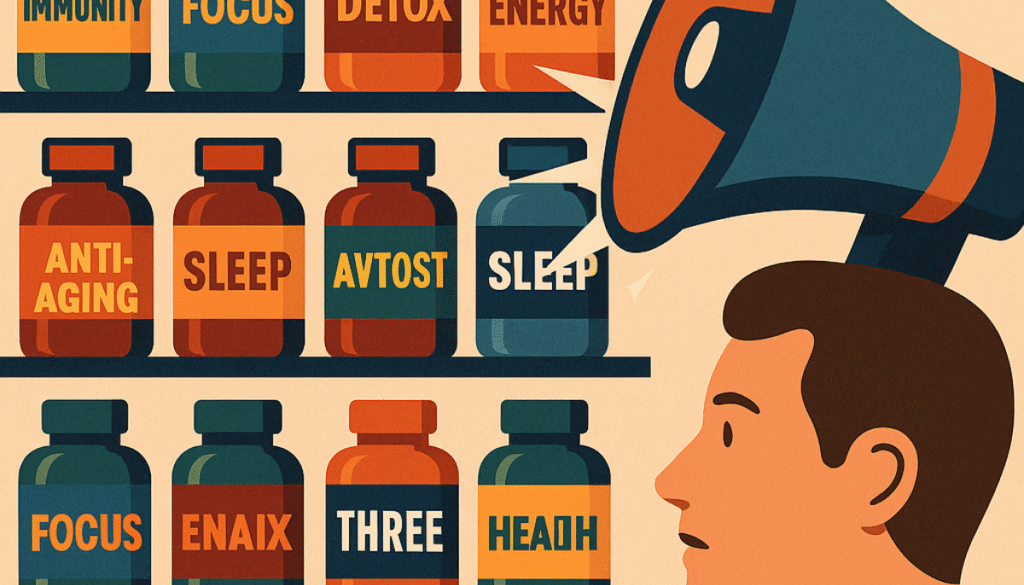
The dietary supplement industry in the U.S. is booming, generating over $50 billion annually. Vitamins, minerals, herbs, and specialty nutrients promise to boost immunity, enhance memory, or support joint health. But behind glossy packaging, celebrity endorsements, and catchy slogans lies a profit-driven marketing machine that often prioritizes sales over scientifically proven health outcomes.
Understanding how supplements are marketed—and why—can help consumers make evidence-based choices, protect their health, and avoid wasting money on products that underdeliver.
How Supplements Are Marketed
Marketing for supplements often relies on three key strategies:
1. Structure/Function Claims
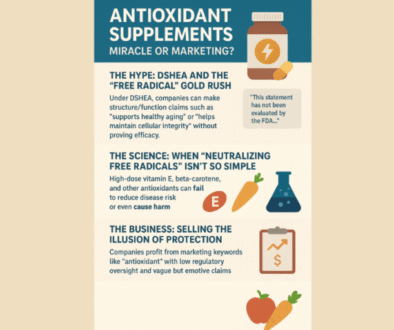
Under DSHEA (1994), supplements can make structure/function claims, such as “supports heart health” or “enhances cognitive function.” These are not allowed to claim disease prevention or treatment, but they must be paired with disclaimers:
“This statement has not been evaluated by the Food and Drug Administration. This product is not intended to diagnose, treat, cure, or prevent any disease.”
Reality check: Many consumers ignore or misunderstand disclaimers, especially when the claims are accompanied by testimonials, before-and-after images, or celebrity endorsements. The result is the perception that the supplement can treat or prevent disease, even though no clinical approval is required.
2. Proprietary Blends
As discussed in another blog, proprietary blends allow companies to mask ingredient doses, making formulas appear potent while actual doses may be sub-therapeutic. Marketing departments often emphasize trendy ingredients in small amounts just to attract attention. This creates a science-forward image without delivering proven results.
3. Celebrity Endorsements and Social Proof
-
Influencers, athletes, and public figures are frequently used to create credibility for a supplement brand.
-
Studies show that consumers are more likely to purchase a product endorsed by someone famous, regardless of clinical evidence.
-
Combined with social media marketing, this tactic magnifies hype, making it appear as though a product is widely validated, when in fact, it may not meet clinical dosing standards.
Pharmacist insight: This approach is a classic example of profit-first strategy—the supplement may have minimal benefit, but effective marketing drives sales.
The Role of Regulatory Gaps
Several regulatory features under DSHEA contribute to the marketing-heavy industry:
-
No pre-market efficacy requirement: Companies can claim benefits without proving effectiveness.
-
Split oversight: The FDA monitors safety and labeling, while the FTC regulates advertising. A supplement may comply with FDA rules but still use exaggerated claims in marketing, which may take months or years for FTC enforcement.
-
Limited enforcement resources: With over 80,000 products on the market, regulatory agencies often focus on the most egregious violations, allowing subtle marketing exaggerations to persist.
In short, DSHEA provides room for creative marketing, which companies exploit to maximize profit while minimizing evidence-based accountability.
Common Marketing Tactics
a. Buzzwords and Trendy Ingredients
-
Phrases like “clinically formulated,” “natural,” or “superfood blend” create a halo effect, suggesting legitimacy without requiring proof.
-
“Exotic” ingredients like turmeric, ashwagandha, or NMN are highlighted to create perceived innovation, even when the amounts are too small to be effective.
b. Limited Disclosure
-
Proprietary blends allow marketers to emphasize ingredients while hiding doses.
-
Labels often highlight the total blend weight, but consumers cannot verify if the doses align with published research.
c. Testimonials and Before/After Images
-
Personal stories and visuals are powerful persuasion tools, despite being anecdotal and non-scientific.
-
Testimonials exploit emotional responses, often overriding rational evaluation of evidence.
How to See Through the Hype
Consumers can take several practical steps to evaluate supplement claims:
-
Check the Supplement Facts panel. Look for ingredient transparency and clinical doses.
-
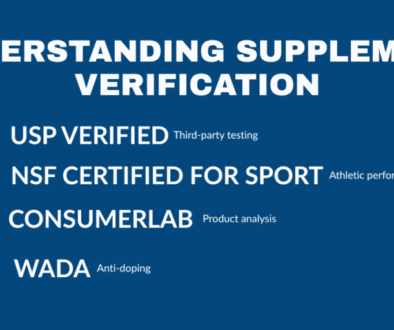
Seek third-party certification. USP, NSF, and ConsumerLab can validate ingredient amounts and purity.
-
Compare claims to scientific evidence. Peer-reviewed studies provide benchmarks for effective dosing.
-
Be skeptical of marketing claims. Words like “miracle,” “clinically formulated,” or “supercharge” are red flags for hype.
-
Consult professionals. Pharmacists, dietitians, and physicians can evaluate supplement efficacy and interactions.
Pharmacist insight: Your health is only as safe as your knowledge and vigilance, because the law allows marketing creativity that can exaggerate benefits.
The Bottom Line
The supplement industry thrives on perception rather than proven efficacy, a system made possible by DSHEA’s minimal pre-market oversight and legal marketing allowances. Proprietary blends, structure/function claims, and celebrity endorsements all contribute to an environment where profit often comes before health outcomes.
As consumers, your best defense is scientific literacy, careful label evaluation, and professional guidance. Understanding how supplements are marketed helps you separate products that may help from those designed primarily to sell.
For a deeper dive, check out my YouTube channel or get my book for evidence-based strategies to navigate this profit-driven industry safely.