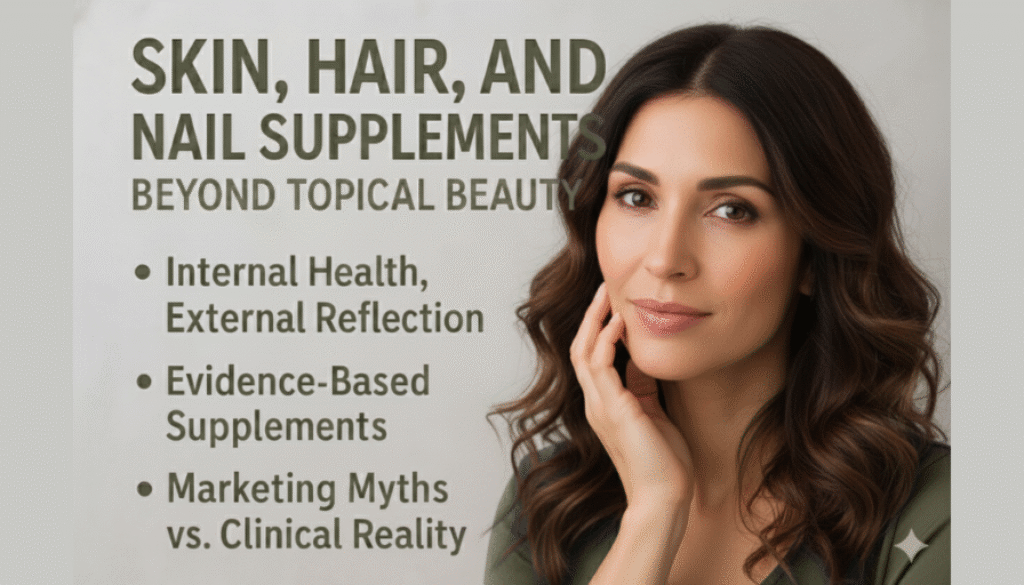
Skin, Hair, and Nail Supplements: Beyond Topical Beauty
In today’s image-driven culture, the pursuit of radiant skin, shiny hair, and resilient nails fuels a booming beauty market. Every label promises “beauty from within,” “glowing skin,” or “stronger hair and nails”—phrases that sound appealing but are often more marketing than medicine. As a clinical pharmacist, I encourage a closer look at what actually supports these tissues and what simply feeds into commercial hype.
At Evidence Education Wellness, we focus on facts, not fads—and understanding that true beauty begins with internal health, nutrition, and lifestyle.
How Internal Health Reflects External Beauty
Your skin, hair, and nails are among the body’s fastest-regenerating tissues. Skin renews roughly every 28 days, nails grow about 3 millimeters per month, and hair continuously cycles through growth and shedding. This rapid turnover requires steady access to amino acids, vitamins, minerals, and healthy fats.
- Collagen, elastin, and keratin provide the structural framework for firmness, elasticity, and strength.
- Lipids maintain the skin’s barrier, helping retain moisture and block environmental damage.
Because of this high nutrient demand, early signs of deficiency often appear externally:
- Skin may look dull or dry.
- Hair may thin, shed, or lose texture.
- Nails may become brittle or peel.
Environmental and oxidative stress—from UV exposure, pollution, and even blue light—further challenge these tissues. Antioxidants are essential to neutralize free radicals and reduce premature aging.
Popular Beauty Supplements: Science vs. Claims
Biotin (Vitamin B7)
Biotin has become the poster child for “hair and nail growth.” While biotin is vital for keratin structure and fatty acid metabolism, true deficiency is rare. Unless a person is deficient—due to genetics, certain medications, or extreme dietary restrictions—high-dose biotin supplements show minimal measurable benefit.
Caution: High doses (found in many “beauty formulas”) can interfere with lab tests, including thyroid and cardiac markers, leading to potential misdiagnosis.
Collagen Peptides
Marketed for “skin elasticity” and “anti-aging,” collagen peptides have credible support. Clinical trials show hydrolyzed collagen can modestly improve hydration and elasticity after consistent use for several weeks to months. It may also help reduce nail brittleness and support hair strength.
Best forms include Type I and III collagen from marine or bovine sources, typically dosed at 2.5–10 grams daily.
Zinc
Zinc is essential for wound healing, immune balance, and cell turnover. Deficiency can lead to acne, poor healing, or hair loss. Moderate supplementation (15–30 mg/day) can support skin integrity—but more is not better. Excess zinc can deplete copper and cause gastrointestinal upset.
Silica (Silicon)
Often marketed for “firmness” and “elasticity,” silica supports collagen and elastin cross-linking. Research using choline-stabilized orthosilicic acid (ch-OSA) shows improvements in nail and hair strength over time.
Omega-3 Fatty Acids
EPA and DHA are critical to maintaining the skin’s lipid barrier and reducing inflammation. Supplementation supports hydration and may calm redness or irritation in conditions like eczema and acne.
Antioxidants: Vitamins C, E, A, and Selenium
Antioxidants defend against oxidative stress, which accelerates visible aging. Vitamin C supports collagen synthesis, Vitamin E protects cell membranes, and Vitamin A regulates sebum and cell turnover. A balanced diet rich in these nutrients is far more effective than megadosing.
Marketing vs. Mechanism
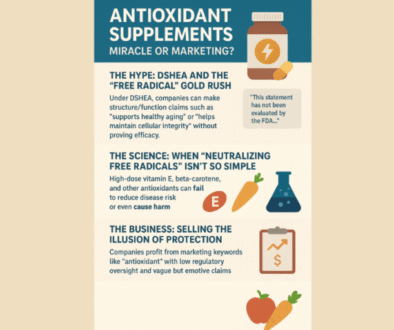
The supplement aisle is filled with bold claims: “restore youthful glow,” “grow thicker hair,” or “nourish nails from within.” These structure-function claims are permitted under DSHEA and often sound persuasive—but they are not required to be supported by clinically meaningful data.
A healthy skepticism is wise:
Avoid “miracle” promises or overnight results.
- Question vague proprietary blends with undisclosed doses.
- Remember that labeling regulations allow broad language that may not align with real outcomes.
A Pharmacist’s Perspective: Beauty as a Reflection of Wellness
Supplements can complement, but never replace, fundamental health practices:
- Nutrition: Prioritize colorful fruits, vegetables, lean proteins, and healthy fats.
- Hydration: Water supports skin elasticity and circulation.
- Sun protection: Daily SPF remains the most effective anti-aging tool.
- Stress management: Chronic stress can accelerate shedding and inflammation.
- Sleep: Nighttime repair processes are vital for skin and hair regeneration.
True improvements take time—weeks to months, not days.
The Takeaway: Evidence Over Aesthetics
Skin, hair, and nail supplements have their place when used wisely and with realistic expectations. Biotin helps in deficiency, collagen peptides support structure, and minerals like zinc and silica aid cellular resilience. Yet, their benefits reach full potential only when paired with comprehensive wellness practices.
At Evidence Education Wellness, we aim to help consumers move beyond marketing claims and understand the real science of “beauty from within.” Because beauty isn’t bottled—it’s built, cell by cell, from genuine health.
Call to Action
If you’ve ever wondered whether your “beauty supplement” is doing anything real, subscribe to Evidence Education Wellness for pharmacist-led insights, research-based reviews, and practical guidance to help you make informed supplement choices.