Bioavailability in Supplements: What Really Gets Absorbed
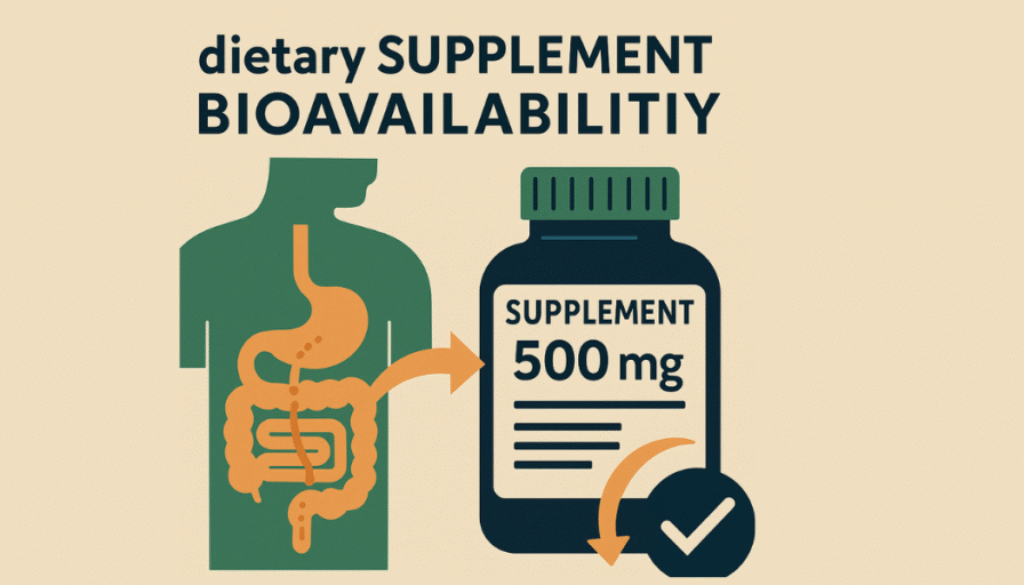
Choosing the right supplement isn’t as simple as picking a bottle with the highest milligrams on the label. What matters most is bioavailability—the fraction of a nutrient that actually survives digestion, crosses the gut wall, and becomes biologically active. Without this, your investment may literally end up in the toilet.
A 2021 tracer study illustrates this perfectly: only 4% of magnesium oxide was retained in the body, compared with 24% of magnesium glycinate at the same elemental dose. In other words, the form matters far more than the number on the front of the label.
The Chemistry of the Payload
The chemical form of a supplement is often the biggest determinant of absorption. Chelated minerals—bound to amino acids or organic acids—are absorbed more efficiently than inorganic forms.
- A clinical trial found iron bisglycinate produced 2.7 times higher ferritin recovery than ferrous sulfate, with far fewer digestive side effects.
- Calcium citrate absorbed 27% better than calcium carbonate in older adults with low stomach acid.
- Among vitamins, methylcobalamin (B12) raised serum levels 30% more than cyanocobalamin, and vitamin D3 outperformed vitamin D2, nearly doubling absorption.
Even genetics can change the equation. People with the common MTHFR mutation saw greater homocysteine reduction when using L-methylfolate instead of folic acid.
Supplements That Struggle with Absorption
Some nutrients, like polyphenols, are notoriously difficult to absorb. Curcumin, the active component of turmeric, has less than 1% bioavailability when taken alone. But co-administering it with piperine (from black pepper) increases blood levels by a staggering 2,000%. Newer innovations like liposomal curcumin also show sixfold higher absorption than standard extracts.
The Role of Delivery Form
How a supplement is delivered—tablet, capsule, softgel, liquid, or liposomal—can make or break absorption.
- A U.K. survey found 17% of tablets failed to disintegrate properly within 30 minutes, meaning they never released their contents for absorption.
- Capsules typically dissolve faster, while softgels are superior for fat-soluble nutrients like vitamin D, CoQ10, and omega-3s.
- Liposomal technology is emerging as the gold standard. In one study, liposomal vitamin C achieved 83% higher absorption compared to standard vitamin C powder, even approaching levels seen with IV vitamin C.
Food, Friends, and Foes in the Gut
Timing and diet also affect supplement absorption.
- Fat-soluble vitamins (A, D, E, K) require dietary fat; vitamin D absorption tripled when taken with a meal containing 15 grams of fat.
- Iron absorption improves when paired with vitamin C, but drops sharply when taken with calcium or phytate-rich foods like bran.
- Your gut microbiome also plays a role. A healthy microbiota boosts calcium absorption and produces vitamins like K2, while antibiotics can disrupt this balance.
Human Factors That Tilt the Scale
Absorption isn’t one-size-fits-all.
- Older adults and people on proton pump inhibitors often have lower stomach acid, impairing magnesium, calcium, and B12 uptake.
- Conditions like celiac disease reduce fat-soluble vitamin absorption, even in remission.
- Genetic variations in transport proteins can reduce vitamin C or folate uptake, meaning some individuals require different forms to achieve optimal levels.
Maximizing Supplement Effectiveness
If bioavailability is the key to supplement success, how can consumers make better choices?
- Choose evidence-based forms: Magnesium glycinate, iron bisglycinate, methylcobalamin, and ubiquinol consistently outperform cheaper forms.
- Pair wisely with food: Take fat-soluble vitamins with meals; avoid combining calcium and iron at the same time.
- Support your gut: A diverse diet with fiber and probiotics can enhance nutrient uptake.
- Consider delivery systems: Liquids, sprays, and liposomes can rescue poorly absorbed actives.
The Bottom Line
When it comes to supplements, absorption matters more than dosage. A 500 mg label claim is meaningless if your body only retains a fraction. By understanding bioavailability, supplement absorption, and delivery forms, you can choose products that don’t just reach your doorstep—they reach your cells.