Cracking the Code: How to Read a Supplement Label Like a Pro
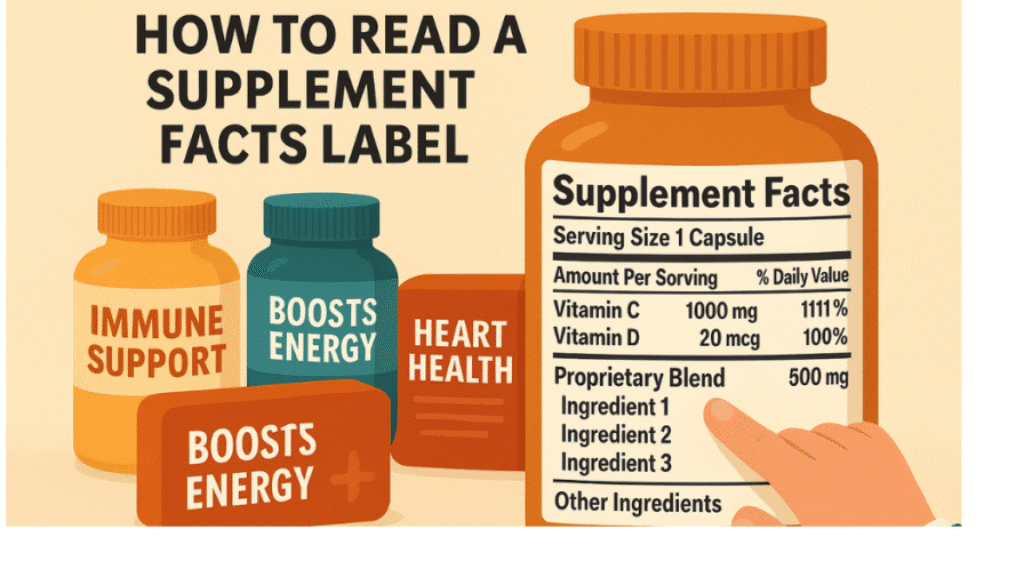
Walk down any supplement aisle, and you’ll be greeted by bold promises—“immune support,” “boosts energy,” “heart health.” But beneath the flashy marketing, the Supplement Facts panel is where the truth lives. Understanding how to read it can save you from wasting money—or worse, from taking unsafe doses.
As a pharmacist, I can tell you: the Supplement Facts label isn’t just fine print. It’s your best defense against misleading marketing. Let’s break it down.
Serving Size: Where It All Begins
The first thing to notice is the serving size. This is the manufacturer’s suggested amount of the product you should take at one time. It could be:
- 1 capsule
- 2 gummies
- 3 scoops of powder
Here’s the catch: serving size is not a medical recommendation. It’s not set by the FDA or based on science. The company decides what a “serving” is. A product could claim “1000 mg of Vitamin C per serving,” but if the serving is four tablets, you’ll need to take a lot more pills than you thought.
👉 Pro tip: Always check if the serving size is realistic. If you’d never take four giant horse pills at once, the impressive numbers on the front don’t mean much.
% Daily Value (%DV): A Double-Edged Sword
Next to most vitamins and minerals, you’ll see a %DV. This number tells you how much one serving contributes to the average person’s daily nutrient needs. The baseline is usually a 2,000-calorie diet (not exactly universal, right?).
- 100% DV means you’re getting the full recommended daily intake.
- 200% DV means double the recommended amount.
- 500% DV … do you really need five days’ worth of Vitamin B12 in one pill?
Here’s the kicker: the %DV is based on minimum requirements to prevent deficiency, not necessarily the optimal amount for health. And for many nutrients (like herbal extracts, probiotics, or amino acids), the FDA hasn’t even set a Daily Value—so you’ll just see an asterisk instead.
👉 Pro tip: High numbers don’t mean better. More isn’t always more when it comes to your body. Fat-soluble vitamins (A, D, E, K) can accumulate and become toxic.
Proprietary Blends: The Black Box
Sometimes you’ll see ingredients lumped under a mysterious “proprietary blend” with no individual amounts listed. The label might brag about “1,200 mg Energy Complex” with a list of five ingredients—caffeine, green tea extract, guarana, ginseng, and who knows what else.
By law, ingredients in a blend must be listed in order of weight, but the exact doses can be hidden. This means that while caffeine might dominate the blend, the ginseng could just be window dressing.
👉 Pro tip: Treat proprietary blends with skepticism. If you don’t know the dose, you can’t judge safety or effectiveness.
Other Key Sections to Check
- Other Ingredients: This is where you’ll find fillers, binders, artificial colors, or allergens. If you’re sensitive to soy, gluten, or dyes, don’t skip this part.
- Manufacturer Information: A reputable company should list contact info. If all you see is a fancy logo and a vague address, that’s a red flag.
- FDA Disclaimer: Look for the legally required line:
“This statement has not been evaluated by the Food and Drug Administration. This product is not intended to diagnose, treat, cure, or prevent any disease.”
If you don’t see it, the product is out of compliance.
Why This Matters
Reading a supplement label is about taking back control. DSHEA gave companies wide freedom to sell supplements without proving they work, but the label is where you can protect yourself. By paying attention to serving size, %DV, and those tricky proprietary blends, you can cut through the marketing and make informed choices.
Bottom Line
The next time you pick up a supplement:
- Start with serving size—is it realistic?
- Check the %DV—does it make sense for your needs?
- Watch out for proprietary blends—transparency matters.
Don’t let the front of the bottle make your decisions for you. Flip it over, read carefully, and you’ll already be ahead of most consumers in the supplement aisle.
But what good is a high dose if your body can’t use it? Dive deeper into the concept of Bioavailability in Supplements: What Really Gets Absorbed.