Supplement Labels Decoded:
How DSHEA Lets Marketing Outshine Science
Walk down any supplement aisle and you’ll feel like you’ve entered a miracle marketplace. Every bottle promises you’ll “support immunity,” “boost energy,” or “maintain a healthy mood.” Sounds amazing, right? Who needs prescription drugs when a $19.99 capsule can apparently do it all?
Well, not so fast. Thanks to the Dietary Supplement Health and Education Act (DSHEA) of 1994, supplement labels are more about selling the dream than delivering the science. DSHEA gave consumers “freedom of choice” but also gave supplement companies the freedom to stretch the truth—just enough to stay legal.
The result? Labels that look scientific but are often just marketing in disguise.
What DSHEA Requires (Spoiler: Not Much)
Yes, there are rules. Every supplement must carry a Supplement Facts panel listing:Active ingredients with amounts per serving
- Percent Daily Value (%DV), if it exists
- Inactive ingredients in descending order
Sounds responsible, right? Until you realize that’s about where the responsibility ends. After that, DSHEA opens the floodgates for creativity, vagueness, and—let’s be honest—straight-up hype.
Proprietary Blends: The Magical Mystery Mix
Here’s one of DSHEA’s greatest hits: the “proprietary blend.” Instead of telling you how much of each ingredient is inside, companies can lump 12 things together under a fancy name like “Brain Power Matrix” or “Super Energy Fusion.”
Sure, the total weight is listed. But how much ginseng is in there? Enough to matter? Or just a sprinkle so it can appear on the label? You’ll never know.
And here’s the kicker: in medicine, dosage is everything. But in supplements, thanks to proprietary blends, dosage is marketing optional. As long as the ingredient names look impressive, you’re supposed to believe the product works.
Structure/Function Claims: Vague but Legal
Now let’s talk about structure/function claims—the crown jewel of supplement marketing. These are statements like:
- “Supports heart health”
- “Promotes joint comfort”
- “Helps maintain normal mood”
- “Boosts energy”
Translation: we can’t actually say it treats disease, but we’d really like you to think it does.
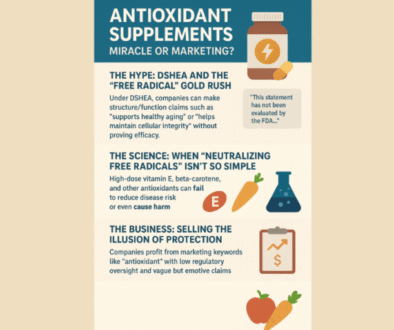
The beauty of these claims is in their vagueness. “Supports heart health” could mean almost anything—from lowering cholesterol (which would make it a drug) to… well… being part of your daily diet. And because DSHEA doesn’t require pre-approval, companies can slap these phrases on labels with little more than a straight face and some wishful thinking.
Yes, they have to add the disclaimer:
“This statement has not been evaluated by the Food and Drug Administration. This product is not intended to diagnose, treat, cure, or prevent any disease.”
But let’s be honest: most people skim right over that fine print while basking in the glow of “immune support.”
The Illusion of Scientific Backing
Of course, vague health claims only get you so far. To really seal the deal, supplement marketers sprinkle on some pseudo-scientific fairy dust:
- “Clinically studied ingredient.” Translation: someone, somewhere, studied something. Not necessarily this product. Not necessarily in humans. But sure, why not?
- “Doctor recommended.” Because apparently, the title “doctor” magically confers universal authority. Who cares if it’s one chiropractor in Idaho who got a free cruise for endorsing it?
- “Backed by science.” Which science, exactly? A rat study from 1993? A test tube experiment? A data set no one ever published? Doesn’t matter—consumers hear “science” and stop asking questions.
- “Clinically proven.” My personal favorite. Proven to do what, exactly? Increase sales? Improve mood for 15 minutes? Because if it actually treated disease, the FDA would classify it as a drug—and that’s a very expensive club supplement makers don’t want to join.
It’s brilliant, really. Wrap a product in a lab coat, toss in some buzzwords, and suddenly your “Immune Support Blend” looks like it belongs in The New England Journal of Medicine.
The Consumer Becomes the Regulator
Here’s the inconvenient truth: the FDA doesn’t review supplements before they hit the market. None. Zero. Zilch. The only time regulators step in is after enough people report problems—or worse, end up hospitalized.
So who’s left as the watchdog? You guessed it: you.
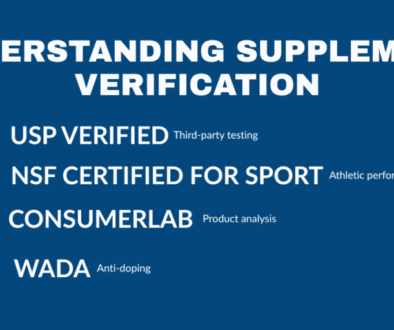
If you don’t want to play guinea pig, look for third-party testing seals like USP Verified, NSF Certified for Sport, or ConsumerLab Approved. These programs at least confirm that what’s on the label is actually in the bottle (a surprisingly bold promise in today’s marketplace). But here’s the catch: very few companies bother, because it’s voluntary and costs money. And let’s face it, profit usually wins over transparency.
A Profit-First Industry
As a pharmacist with more than 25 years of experience, I can say this bluntly: the supplement industry’s first priority is profit—not your health outcomes. Labels aren’t written to educate you; they’re designed to get you to swipe your credit card.
And remember, even when companies wave around “scientific proof,” we can thank researchers like Dr. John Ioannidis for reminding us that most published findings are false or at least exaggerated. Combine that with DSHEA’s label loopholes, and you’ve got a perfect storm where marketing trumps science almost every time.
How to Outsmart the Label
So how do you protect yourself? Treat supplement labels like gossip magazines—entertaining, sometimes based on a shred of truth, but not exactly reliable. Here are a few tips:
- Be suspicious of proprietary blends. They usually hide weak dosages.
- Laugh at vague claims. “Promotes vitality”? So does a cup of coffee.
- Look for third-party testing. If a brand is serious, it’ll have USP, NSF, or ConsumerLab verification.
- Cross-check evidence. PubMed is your friend. Marketing copy is not.
- Ask a professional. Pharmacists, doctors, and dietitians can separate science from spin.
The Bottom Line
DSHEA turned supplement labels into marketing goldmines. Between proprietary blends that hide dosages, structure/function claims that say everything and nothing at the same time, and pseudo-scientific phrases that sound impressive but prove little, the consumer is left holding the bag.
Supplements aren’t inherently bad—but the way they’re marketed? That’s another story. Until regulations change, the best tool you have is skepticism. Read labels with a critical eye, laugh at the fluff, and remember: if it sounds too good to be true, it probably belongs on a label in the supplement aisle.